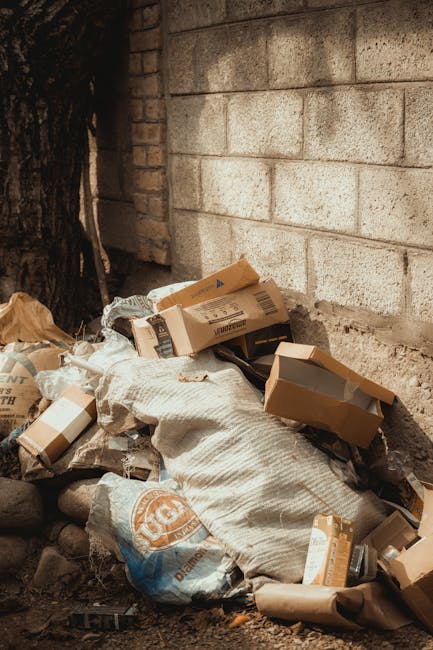
Haringey Council rubbish disposal rules for Muswell Hill: what residents and local businesses need to know
If you live or work in Muswell Hill, rubbish disposal can feel straightforward right up until it isn't. One black bag is fine, then suddenly you're dealing with a broken wardrobe, a mattress that won't fit in the lift, or a pile of builders' rubble after a weekend project. The Haringey Council rubbish disposal rules for Muswell Hill matter because the wrong choice can lead to missed collections, fly-tipping risk, complaints from neighbours, and unnecessary stress. This guide breaks the whole thing down in plain English, with practical steps you can actually use on a busy London street.
We'll look at what the rules mean in everyday life, how disposal usually works, what to do with awkward items, and when a professional clearance or waste removal service makes more sense than trying to wrestle everything to the kerb yourself. No fluff. Just the useful bits.
Quick takeaway: the safest approach is simple-separate recyclable, general, bulky, garden, builder's, electrical, and hazardous waste before you put anything out, and always check the disposal route that best fits the item, the timing, and the property access.
Table of Contents
- Why Haringey Council rubbish disposal rules for Muswell Hill matters
- How Haringey Council rubbish disposal rules for Muswell Hill works
- Key benefits and practical advantages
- Who this is for and when it makes sense
- Step-by-step guidance
- Expert tips for better results
- Common mistakes to avoid
- Tools, resources and recommendations
- Law, compliance, standards, or best practice
- Options, methods, or comparison table
- Case study or real-world example
- Practical checklist
- Conclusion
- Frequently asked questions
Why Haringey Council rubbish disposal rules for Muswell Hill matters
Muswell Hill has a very particular feel to it: family homes, flats above shops, narrow residential roads, shared bins, and not always a lot of spare space. That mix makes rubbish disposal a practical issue, not just an admin one. If waste is left out incorrectly, it can block pavements, attract pests, make the street look neglected, and create tension between neighbours. To be fair, in a place where front gardens are often close to the pavement and bin storage is limited, a small mistake becomes very visible very quickly.
These rules also matter because different waste streams behave differently. Food waste should not be bundled with garden cuttings. Electrical items need separate handling. Heavy construction waste can damage bins and cause collections to be refused. And once you get into the world of sofas, fridges, mattresses, or office clearances, the question stops being "can I put this out?" and becomes "what is the correct route for this item?"
For households, the main benefit is avoiding hassle and keeping the property tidy. For landlords, managing agents, and local businesses, it is also about compliance and reputation. A tidy frontage says a lot. So does a pile of cardboard drifting down the road on a windy Thursday morning, which, if we're honest, is not the look anyone wants.
How Haringey Council rubbish disposal rules for Muswell Hill works
At a practical level, rubbish disposal in Muswell Hill usually comes down to a few categories: everyday household waste, recycling, food waste where applicable, bulky items, garden waste, trade or builder's waste, and hazardous materials. The way you handle each type affects whether it can be collected, where it needs to go, and whether a private clearance service is the right solution.
Most people think first about bins, but the real question is classification. Once you know what you have, the rest becomes easier. A pile of old clothes and cardboard is one thing. A broken washing machine, half a shed, and some paint tins is another entirely.
Typical disposal routes you may need to consider
- Household bins: for normal residual waste and accepted recycling streams.
- Bulky waste collection: for larger household items when the council accepts them through its bulky waste route.
- Recycling separation: for cardboard, paper, glass, cans, and other accepted recyclables.
- Specialist handling: for fridges, freezers, mattresses, sofas, and electrical items.
- Builder's or trade waste: for rubble, timber, plasterboard, and renovation debris.
- Hazardous waste disposal: for items that need extra care, such as chemicals or certain electricals.
In many Muswell Hill homes, especially flats and converted buildings, access is the hidden issue. It's one thing to have waste ready. It's another to carry a bulky item down stairs, through a communal hallway, and out to a street with limited parking. That is where a planned collection can save a huge amount of time and backache.
If your waste is office-related, confidential, or tied to a business move, it may be worth looking at office clearance or, for sensitive paperwork, confidential shredding rather than trying to mix it into general disposal.
What usually causes problems
The most common problems are simple ones: putting the wrong thing in the wrong container, overfilling bags, leaving waste out too early, or assuming an item is "just rubbish" when it actually needs specialist handling. A water-damaged mattress, for example, is still a mattress. A broken fridge is still an appliance. A paint tin with liquid residue is not the same as an empty, dry can.
Key benefits and practical advantages
Following the local rubbish disposal rules properly does more than avoid a complaint. It makes day-to-day life smoother. The benefits are surprisingly practical, especially in a busy area like Muswell Hill where space is at a premium and collections need to run on schedule.
- Cleaner streets and frontages: waste is less likely to spill, smell, or attract pests.
- Fewer collection issues: when waste is sorted correctly, it is less likely to be rejected.
- Lower risk of fly-tipping: people are less tempted to abandon awkward items improperly.
- Better recycling outcomes: separating material properly helps recyclable waste stay clean and usable.
- Less stress: you are not left guessing what can go where at the last minute.
- Safer handling: awkward, heavy, or sharp items are less likely to cause injuries.
For many households, the biggest advantage is simply time. When a loft, garage, or spare room is full, a clear plan means you can deal with the lot in one go instead of making five different trips and discovering, on the third trip, that the item you thought was recyclable actually needs a separate route. Happens all the time.
If you are clearing out a flat, a family home, or a rented property, services such as flat clearance, house clearance, or home clearance can also reduce the amount of sorting and lifting you need to do yourself.
Who this is for and when it makes sense
This topic is relevant to more people than you might think. It is not only for homeowners with overflowing bins. In fact, some of the most common use cases are fairly ordinary and very local.
Homeowners and tenants
If you are clearing out after a tenancy, redecorating, or simply catching up on clutter, the rules help you decide whether to use normal bins, arrange a bulky collection, or book a clearance. A kitchen refurb, for instance, creates a different waste profile from a spring clean. One is mostly packaging and household rubbish; the other may involve appliances, cabinets, and sharp offcuts.
Landlords and letting agents
End-of-tenancy waste is often mixed and messy. There may be old furniture, broken lamps, bags of general waste, and items left in cupboards because nobody wanted to deal with them. A structured approach avoids delays between tenancies and reduces the chance of leaving a property in an unsuitable condition.
Local businesses
Shops, offices, cafes, and small studios often produce awkward waste streams: packaging, old stock, damaged fixtures, office furniture, or confidential material. Business waste should not be treated casually. It has its own handling expectations, and a clean disposal process helps protect your business image as well as the building itself.
Builders and renovators
Renovation waste is a world of its own. Plasterboard, broken tiles, timber, and mixed rubble are heavy and space-hungry. If you are doing work around Muswell Hill, a dedicated route such as builders waste clearance is often the most efficient way to keep the job moving.
People with bulky or specialist items
Some items are just awkward. Sofas. Fridges. Old mattresses. A freezer that has stopped humming and now dominates the hallway like an unwanted piece of modern art. For those, specialist services such as mattress and sofa disposal or fridge and appliance removal are often the cleaner solution.
Step-by-step guidance
If you want a simple, workable method, use this process. It is not glamorous, but it works.
- Identify the waste type. Start by separating general waste, recycling, food waste, bulky items, garden waste, electricals, builder's waste, and hazardous materials.
- Check whether anything needs special handling. Fridges, freezers, chemicals, broken screens, mattresses, and confidential paperwork usually need more than a normal bin.
- Measure the volume. A few bags is very different from a full room or a garage. Volume helps you decide between collection, clearance, or skip-style disposal.
- Think about access. Can waste be carried safely down stairs? Is there parking nearby? Are there shared hallways, timed access windows, or lift restrictions?
- Choose the disposal route. Use the council route if it fits, but if the waste is bulky, mixed, or time-sensitive, a private service may be simpler.
- Prepare the area. Keep sharp items wrapped, liquids sealed, and recyclable materials separate. It makes loading quicker and safer.
- Schedule properly. Put waste out only when required. Early placement can cause obstruction, nuisance, or complaints.
- Keep a record if it is business waste. That is sensible practice, and in some situations it is more than sensible-it is expected.
A good real-world habit is to stand back and look at the pile once it is sorted. Does it still look mixed? Are there any obvious problem items hiding in the middle? Five minutes of checking usually saves a much bigger headache later.
Expert tips for better results
After years of seeing waste clearances go smoothly and, let's be honest, not so smoothly, a few patterns stand out.
1. Sort before you move anything
Moving a mixed pile twice is tiring and inefficient. Sort first, move later. That way, if a bag turns out to contain electrical cables, broken glass, and old batteries, you catch it before it ends up in the wrong pile.
2. Keep dry recyclables clean
Cardboard with grease stains, wet paper, and food-contaminated packaging often causes problems. Dry, flattened materials are easier to handle and more likely to be accepted for recycling.
3. Treat "one awkward item" seriously
One old freezer can create more disruption than a dozen bin bags. The same goes for a sofa in a narrow staircase or a heavy cabinet on the second floor. It only takes one awkward item to change the whole plan.
4. Plan around parking and access
In Muswell Hill, access is often the hidden cost-time, not money. If a collection vehicle cannot get close, the crew may need longer on site. If you are doing it yourself, you may need more than one person. And a trolley, frankly, is worth its weight in tea and biscuits.
5. Use the right route for the right material
Garden cuttings belong in garden waste handling, not mixed with builder's rubble. Old office filing should not be left loose with general waste. Separate the material and the whole process becomes easier, safer, and cleaner.
If you are comparing disposal options, it may help to read about recycling and sustainability and then compare that with what can go in a skip. Even if you do not end up using a skip, the guidance can help you understand what belongs with what.
Common mistakes to avoid
A lot of rubbish disposal issues come from small, avoidable mistakes. The good news? They are easy to fix once you know what to look for.
- Mixing everything together: this is the fastest way to create a disposal problem.
- Leaving waste out too early: it can obstruct pavements and attract complaints.
- Assuming bulky items are "normal waste": many need separate handling.
- Forgetting about hazardous components: batteries, liquids, chemicals, and some electrical items cannot be treated casually.
- Overestimating what you can carry safely: a wardrobe is heavy; a wardrobe down stairs is heavier.
- Ignoring shared-building rules: flats and conversions often have their own access expectations.
- Choosing the cheapest option without checking what's included: a low quote is less useful if the service cannot handle your actual waste.
One particularly common mistake is leaving a clearance until the end of a renovation or move. Suddenly the room is full, the deadline is tomorrow, and everything feels urgent. That is when people start making poor choices. Try not to let it get there. Future-you will be grateful.
Tools, resources and recommendations
You do not need complicated systems to manage disposal well. A few practical tools make a big difference.
Useful household tools
- Heavy-duty bin bags for mixed general waste
- Labels or marker pens for sorting piles
- Sturdy gloves for handling sharp or dusty items
- A folding trolley for heavier items
- Stretch wrap or tape for securing loose parts
- Dust sheets or old blankets to protect communal areas and floors
When a professional service is worth it
If the waste is bulky, time-sensitive, or mixed across several categories, a professional collection can be the least stressful option. That is especially true for furniture, appliances, loft clear-outs, and end-of-tenancy jobs. For example, a small flat with no lift and a sofa that will not fit round the staircase is exactly the kind of job where professional help pays for itself in saved time and reduced aggravation.
Relevant services can include furniture clearance, furniture disposal, garage clearance, loft clearance, and garden clearance. Each is useful in a slightly different scenario, which is why matching the service to the waste matters so much.
Law, compliance, standards, or best practice
Waste disposal in the UK sits within a framework of legal duties and practical best practice. You do not need to memorise every detail, but you should understand the principle: waste must be stored, moved, and handed over responsibly, and certain materials require more care than ordinary household rubbish.
For residents, the main compliance points are usually straightforward: do not dump waste illegally, do not obstruct public paths, and do not place items out in a way that causes a nuisance. For businesses, the expectations are stronger. You may need to show that waste is handled by an appropriate carrier, kept separate when necessary, and managed in a way that supports traceability and safety.
Hazardous waste is where caution really matters. Paints, oils, solvents, sharp materials, and some electricals can cause harm if they are mixed with ordinary rubbish. If you are unsure, treat the item as a special case rather than gambling on it. That is just sensible.
Health and safety also matter during lifting and loading. Heavy or awkward items can injure the back, hands, or feet very easily. If an item requires a two-person lift, it probably does. No point pretending otherwise.
For service standards, good practice includes transparent pricing, clear collection terms, safe handling, suitable insurance, and responsible recycling or disposal routes. If you are comparing providers, it is reasonable to look for clear policies around health and safety, insurance and safety, and payment and security.
Options, methods, or comparison table
There is no single best disposal method for every situation. The right choice depends on the type of waste, the amount, and how quickly you need it gone.
| Method | Best for | Pros | Watch out for |
|---|---|---|---|
| General bins and recycling | Everyday household waste | Simple, familiar, low effort | Not suitable for bulky or specialist items |
| Bulky waste collection | Large household items | Good for single items or small loads | May not suit mixed waste or urgent clearances |
| Skip-style disposal | Renovation or heavy waste | Handy for larger jobs and ongoing projects | Needs space and correct loading rules |
| Professional waste removal | Mixed, bulky, or time-sensitive waste | Fast, flexible, less lifting, less hassle | Choose a provider that handles your exact waste type |
For many Muswell Hill residents, the decision comes down to space and effort. If the waste is light and predictable, bins may be enough. If it is bulky, mixed, or awkward, professional support is usually the calmer option. Honestly, calmer matters more than people think.
Case study or real-world example
Imagine a two-bedroom flat near Muswell Hill Broadway after a long overdue clear-out. There is a broken bookshelf, two mattresses, a small fridge, several bags of mixed clutter from the airing cupboard, and a pile of old kitchen packaging from recent repairs. On paper, it sounds manageable. In practice, the lift is tiny, the hallway is shared, and the fridge is too heavy to tilt safely on one person's own.
The sensible approach would be to separate the general bags from the bulky items, then decide whether the fridge needs specialist removal and whether the mattresses should be dealt with separately. The kitchen packaging could be flattened and sorted for recycling where possible. The bookshelf might be suitable for furniture disposal, while the fridge would be better handled via appliance removal. That avoids dirty hallways, endless trips up and down stairs, and the classic "where do we even put this for now?" problem.
What usually makes the difference is planning. Not perfection. Just planning.
Practical checklist
Use this checklist before you book a collection or place items out for disposal.
- Have I separated general waste, recycling, food waste, bulky items, and hazardous materials?
- Do any items need special handling, such as fridges, mattresses, electronics, or chemicals?
- Is the waste stored safely and not blocking corridors, entrances, or pavements?
- Do I know whether the item belongs with council collection, bulky waste, or a private clearance service?
- Have I checked access, parking, and lifting requirements?
- Is anything confidential and needing secure destruction?
- Have I considered recycling before disposal?
- If this is business waste, do I need a cleaner record of what was removed?
- Am I clear on the collection time and what needs to be ready before arrival?
If you are clearing a bigger space, such as a spare room or attic, the checklist can save you from the half-finished chaos that sneaks up around 6pm on a damp Tuesday. Small preparation, big difference.
Get a free quote today and see how much you can save.
Conclusion
Haringey Council rubbish disposal rules for Muswell Hill are really about making waste manageable, safe, and fair to everyone sharing the space. Once you break the job into categories and think about access, the whole thing becomes much less intimidating. A bag of household waste, a stack of cardboard, and a broken appliance do not belong in the same mental box, even if they all feel like "stuff to get rid of."
The practical win is simple: sort early, choose the right route, and handle bulky or awkward items before they become a problem. That keeps your home, street, and schedule in better shape. And if you need a hand with a bigger clear-out, a specialist service can take a lot of pressure off your shoulders. Sometimes that is the difference between a messy weekend and a proper fresh start.
A tidy space has a way of making everything else feel lighter. That part never really gets old.
Frequently Asked Questions
What are the main rubbish disposal rules in Muswell Hill?
The main rules are to sort waste properly, use the correct collection route, avoid blocking pavements, and treat bulky, electrical, and hazardous items separately from ordinary household rubbish.
Can I put bulky items out with normal bins?
No, bulky items usually need a separate route. Sofas, wardrobes, mattresses, and appliances are often too large or unsuitable for normal bin collection.
What should I do with old furniture in Muswell Hill?
Furniture should be assessed item by item. Some pieces may be reusable, some suitable for furniture clearance, and others need disposal because they are damaged, contaminated, or too awkward to move safely.
How do I dispose of a fridge or freezer?
Fridges and freezers should not be treated like general rubbish. They usually require a specialist appliance removal route because of their size and handling needs.
Can builders' waste go in household bins?
Usually not. Builders' waste such as rubble, plasterboard, timber, and tiles is too heavy or unsuitable for normal household collections and is better handled through a dedicated builder's waste service.
What counts as hazardous waste?
Hazardous waste can include chemicals, solvents, certain paints, oils, batteries, and some contaminated materials. If you are unsure, it is safest to treat the item as needing special handling.
Is garden waste handled differently from general waste?
Yes. Garden cuttings, branches, soil, and similar materials are usually best kept separate. A dedicated garden clearance route is often easier and cleaner than mixing them into general rubbish.
What if I live in a flat with limited access?
Limited access is a common issue in Muswell Hill flats. In that case, it helps to plan collection timing, check lift and stair access, and use a service that can handle the lifting and loading.
How can I avoid fly-tipping problems?
Never leave waste in an unapproved place, do not dump it early, and use a proper disposal route for bulky or awkward items. Good sorting and timely collection are the easiest safeguards.
Do businesses in Muswell Hill have different disposal expectations?
Yes, businesses usually need to manage waste more formally, especially where there is office waste, packaging, or confidential material. A business waste removal approach is often more suitable than a general household solution.
What is the best option for a full house clear-out?
For a full house clear-out, a house clearance or home clearance service is often the most practical option, especially where furniture, mixed waste, and access issues are all part of the job.
Where should I start if I am overwhelmed by clutter?
Start with one room, one category, and one small win. Separate obvious recycling, keep special items aside, and decide what truly needs specialist removal. It sounds simple because it is, and that is usually the point.
Contact the team if you need a straightforward conversation about your waste type, property access, or the best disposal route for a Muswell Hill clearance.